
Introduction
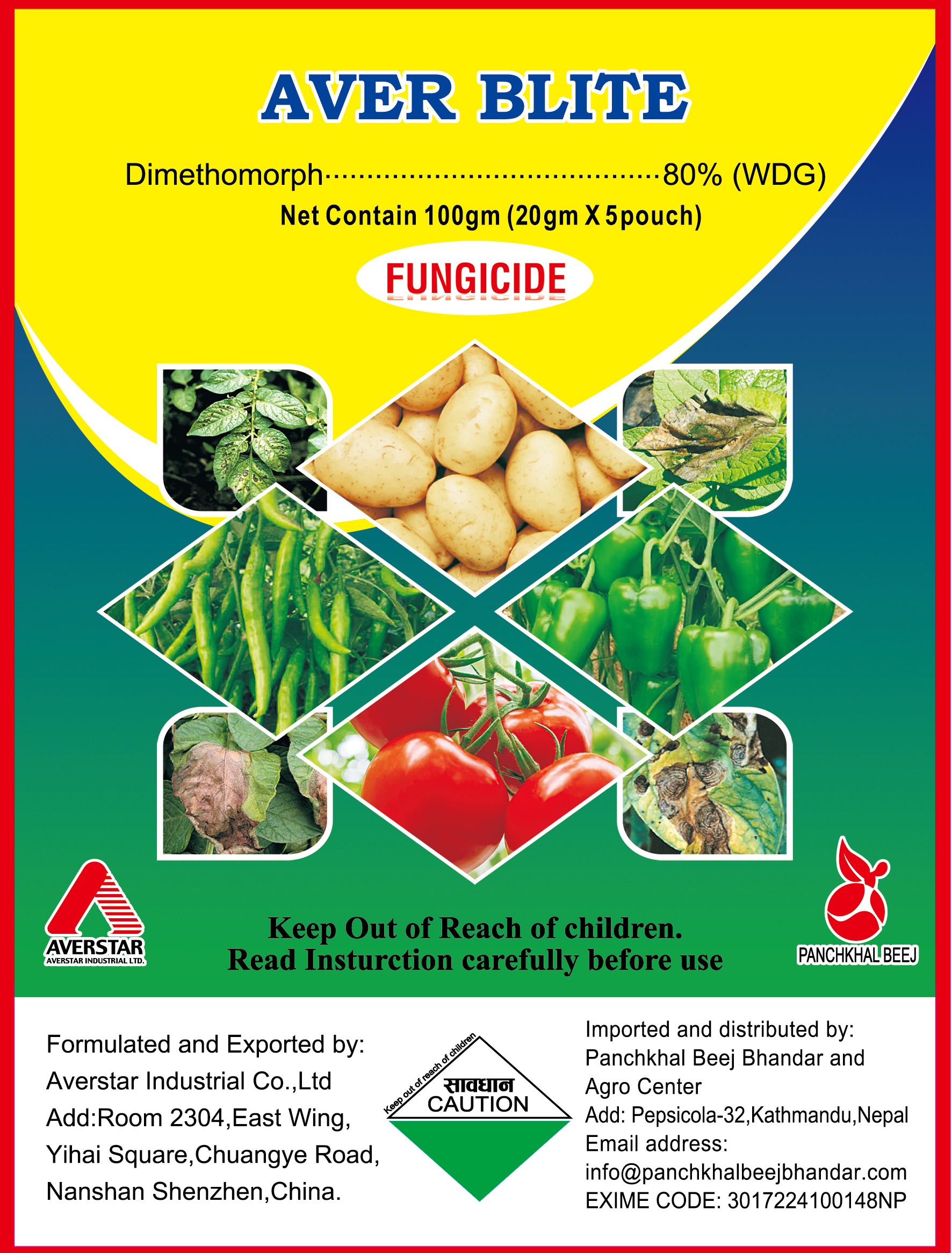
Aver Blite is a highly effective fungicide from Panchkhal Beej Bhandar containing Dimethomorph 80% WDG. Specifically formulated to combat late blight and downy mildew — two of the most destructive and fast-spreading diseases facing potato and tomato growers across Nepal — Aver Blite delivers reliable protection from the first spray.
Its water-dispersible granule (WDG) formulation ensures easy, precise measuring, clean mixing, and consistent, even coverage across the crop canopy. Whether you are managing a small farm plot or a large-scale commercial operation, Aver Blite adapts seamlessly to your spray programme.
How It Works
Cell Wall Disruption
Dimethomorph inhibits cell wall biosynthesis in oomycete pathogens by blocking the formation of phospholipids — an essential membrane component — causing the pathogen cell wall to break down rapidly.
Curative Action
When applied after early infection, Aver Blite stops the fungal life cycle in its tracks, arresting sporulation and preventing further spread within the canopy.
Protective Shield
Applied preventively before infection, Aver Blite creates a residual protective barrier on leaf surfaces that denies entry to incoming pathogen spores under high disease-pressure conditions.
Key Benefits
Target Pests & Diseases Controlled
| Disease | Pathogen | Affected Crops | Severity |
|---|---|---|---|
Late Blight |
Phytophthora infestans | Potato, Tomato | ⚠ High |
Downy Mildew |
Peronospora spp. | Cucumber, Grapes, Onion | ⚠ High |
Crown Rot |
Phytophthora capsici | Pepper, Cucurbits | ⚠ Medium |
Recommended Crops
Aver Blite is registered and suitable for use across the following crops commonly grown in Nepal:
Application Guide
Always wear protective gloves, face mask, and eye protection during mixing and application. Avoid spraying in windy or rainy conditions. Keep children and animals away from the application area. Wash hands and exposed skin thoroughly after use. Store in the original sealed container in a cool, dry place away from food, feed, and children. Shelf life is typically 2–3 years when stored correctly.
Frequently Asked Questions
Aver Blite is a fungicide from Panchkhal Beej Bhandar containing Dimethomorph 80% WDG. It works by inhibiting cell wall biosynthesis in oomycete pathogens like Phytophthora infestans, causing rapid breakdown of the fungal cell wall. It is effective both curatively (after early infection) and protectively (before infection), making it a versatile choice for integrated disease management programmes.
Aver Blite is available through Panchkhal Beej Bhandar's network of 150+ authorized dealers across all 7 provinces of Nepal. Use our Find a Dealer page or call 011-499299 to locate your nearest authorized stockist. Our team can also guide you on availability in your specific area.
The recommended dosage is 1.5–2 g per liter of water. Begin spraying at early crop growth stage or when disease risk is elevated. Repeat every 7–10 days depending on disease pressure and weather conditions. For personalized guidance specific to your crop and region, contact our agronomists at 011-499299.
Yes — Aver Blite is PQPMC registered and officially imported through authorized channels. It has low phytotoxicity risk when used as directed. Always read the product label before use, follow recommended dosages and intervals, observe the pre-harvest interval, and wear appropriate protective equipment. Keep out of reach of children and store separately from food and feed.
Store in a cool, dry place away from direct sunlight, heat, and moisture. Keep in the original sealed container away from food, feed, and children. Shelf life is typically 2–3 years when stored correctly. Do not store in locations subject to extreme temperature fluctuations.